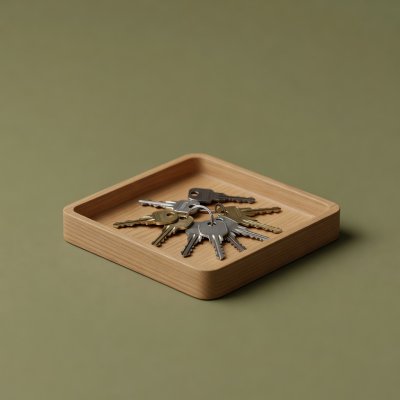
Drop zone
Open trays
Visible, shallow and easy to return to.
Method guide / Storage
The best storage removes an awkward move. Start with the opening, the reach and the return.
Visible, shallow and easy to return to.
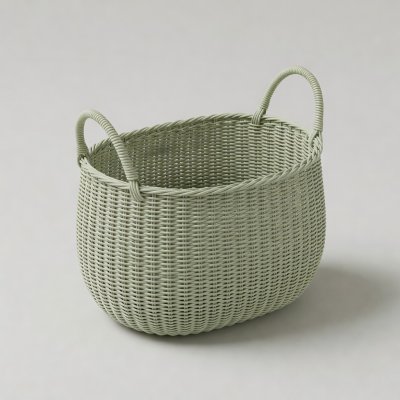
Move one useful category together.
Write down what the container must make easier. “Keep charging cables beside the shared charging point” is a job. “Buy a matching basket” is a purchase without a test. Decide who will use the storage, how often they will open it and whether it needs to move. These details matter more than the material or finish.
Collect the actual items before measuring. An organizer that holds a theoretical category may not fit the long brush, bulky charger or tall bottle your household owns. Allow space for hands, handles and the action of returning things.
Measure the inside width, depth and height of the storage area. Then check the opening: hinges, drawer runners, pipes and door frames can reduce access. A box may fit on a shelf but still be impossible to lift out without tilting. Record the narrowest useful dimension rather than the largest visible one.
Make a cardboard footprint if the fit is uncertain. Open nearby doors and drawers with the template in place. For baskets, check both outer dimensions and useful interior capacity; thick walls and sloping sides can make the inside smaller than expected.
| Action | Useful form | Common friction |
|---|---|---|
| Drop small daily items | Shallow tray | Deep sides hide the contents |
| Carry supplies together | Handled caddy | Loaded weight is uncomfortable |
| Separate drawer categories | Adjustable dividers | Dividers prevent full closure |
| Protect occasional items | Suitable lidded box | Daily items become trapped in stacks |
| Hold heavy equipment | Rated, stable shelving | Capacity or anchoring is unverified |
No container is universally better. A lid helps protect a stored item but adds a step during every use. Choose that trade-off deliberately.
Stacking uses vertical space, but the lower box becomes expensive in effort. Use stacks mainly for things retrieved infrequently. For daily supplies, favor a single accessible layer, a drawer or a pull-out arrangement that is appropriate for the cabinet. Leave enough room to grip the item rather than extracting it with fingertips.
Transparent storage can help when remembering contents is difficult. Opaque storage can reduce visual distraction. Neither preference needs defending. Clear labels and a consistent destination can support either choice, provided the container remains easy to open.
Read manufacturer instructions for shelf loads, wall fixings and assembly. A shelf’s stated capacity does not automatically describe the wall or fastener capacity. Use appropriate anchoring and seek qualified help when the wall construction or installation is uncertain. Keep heavier objects low and avoid arrangements that invite climbing.
Consider moisture, heat and cleaning. A decorative basket may be unsuitable beside a damp sink. Keep combustible storage away from heat sources, and do not block ventilation. Food containers should be intended for their use. Hazardous products should remain identifiable and secured according to their labels.
A clean spare tray or sturdy box can test a category before you spend money. Do not use a temporary container where hygiene, moisture or safety makes it unsuitable. The point is to learn the right size and access pattern, not to make every improvised solution permanent.
Try the arrangement during normal activity, including the busy moments. If the box is repeatedly left open, the lid may be unnecessary. If loose objects collect beside it, the opening may be awkward or the category may be unclear.
When the prototype works, replace it only if a better material, stronger construction or improved fit solves a real problem. Keep measurements available and check return conditions before buying. Avoid ordering a full matching set until one unit has been tested in the actual space.
A useful container should make the next use easier and the return more likely. If it simply hides an unresolved pile, revisit the category or reduce what is stored before adding another layer of equipment.
Cookies on this site Some cookies are needed for the site to work. Others help us understand how it is used. You can change your choice later. More about cookies